





First Summer at Stanford

First Summer@Stanford

In July 2007, the first Summer@Stanford consisted of only six students in a physics lab on the Stanford University campus, but they were a lively bunch. As OHS Physics Instructor Gary Oas remembers, "David Sell, who later got a Ph.D. from Stanford in Applied Physics and is now a physicist at Applied Materials, was a bit energetic. I had borrowed a Michelson-Morley interferometer from the physics department to demonstrate some optics phenomena and at one point David sat on it (it was fine mostly)." All the equipment survived, and S@S remains the setting for many a story of student escapades.

OHS Prom

Don't Stop Believin'!

At the very first school prom in 2010, Stanford OHS alum David Sell asked the DJ to play Journey's mega-hit "Don't Stop Believin'" to close out the dance. The crowd went wild! A new tradition was born, and since then, each school dance - from Homecoming to Prom - closes with this song. 

Early Pixel

The Evolution of Pixel

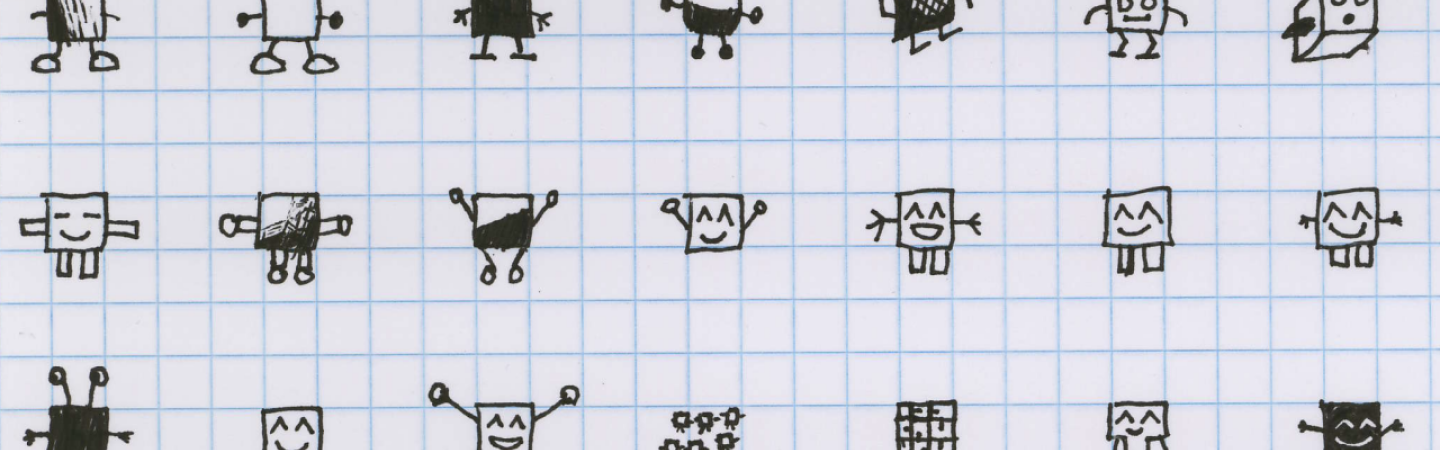
SOHS's mascot Pixel was created during the 2007-08 school year. The Pixel was an off-the-cuff idea from Maya Lewis ('09) and drawn by Jesse Selover ('11). The original digital drawing was a little rough, but it did have that winning smile! During a online student assembly, three mascots, the Gryphon, the Sapling, and the Pixel, were presented, with the Pixel coming out the clear winner. After the mascot was selected, it received some professional sprucing up with a color gradient and rounded features. Other than that, the original design has remained unchanged to this day, with the exception of students making their own renderings of the Pixel throughout the school year.

student on computer

Our Beginning

Stanford Online High School was founded at Stanford University in 2006 with a gift from the Malone Family Foundation, becoming one of the nation’s first independent online schools. Central to our mission was creating an academically rigorous online program of study accessible to intellectually adventurous students regardless of geographic location. OHS students over the years have logged into class from every U.S. state and dozens of countries, from farms and from megacities, and even—as in this photo of OHS alum Ayla Besemer—from a sailboat on the move. In 2006, students could enroll in grades 10-12, and there was a tiny graduating class. Today, Stanford OHS enrolls about 1,000 students in grades 7-12, including full-time, part-time, and single course students, and has a graduating class of close to 100.

First Grad

First Graduating Class

In June 2007, Stanford Online High School celebrated its first graduating class. The ceremony was lighthearted and included clown noses with regalia. "At the very first graduation ceremony, I was surprised to be awarded a pink boa for "most entertaining instructor," said Rebecca Shields, founding Director of the Writing & Tutoring Center at Stanford OHS. "Even though it was a 100-degree day and the pink feathers nearly suffocated me, I wore that boa with pride. I think our instructional staff consisted of about three others at this point, so my competition wasn't incredibly stiff. 20 years later, Stanford OHS has changed tremendously. Some of the changes are tangible - from an intimate graduation ceremony for a class of one held under the olive trees of Nora Suppes Courtyard, to a weekend of activities attended by 500+ students, family members, and staff. But my favorite changes are non-quantifiable: the ways that students exercise greater agency in their learning, the ways that student supports have grown in breadth and depth, and the ways in which students support one another. Being at Stanford OHS still feels like taking part in an exciting experiment!"

20th Logo Banner wide

A Look Back at the Past 20 Years!

Stanford OHS is entering its 20th year. Take a walk down memory lane.

Startup Club

Startup Incubator Club Team Members Win the Conrad Challenge!

A huge congratulations to Stanford OHS students Sumi K., Keshav N., and Andrew M. who developed an innovative solar cell solution that allows for improved light absorbance and a high-efficient energy storage mechanism.